info@climair-project.eu



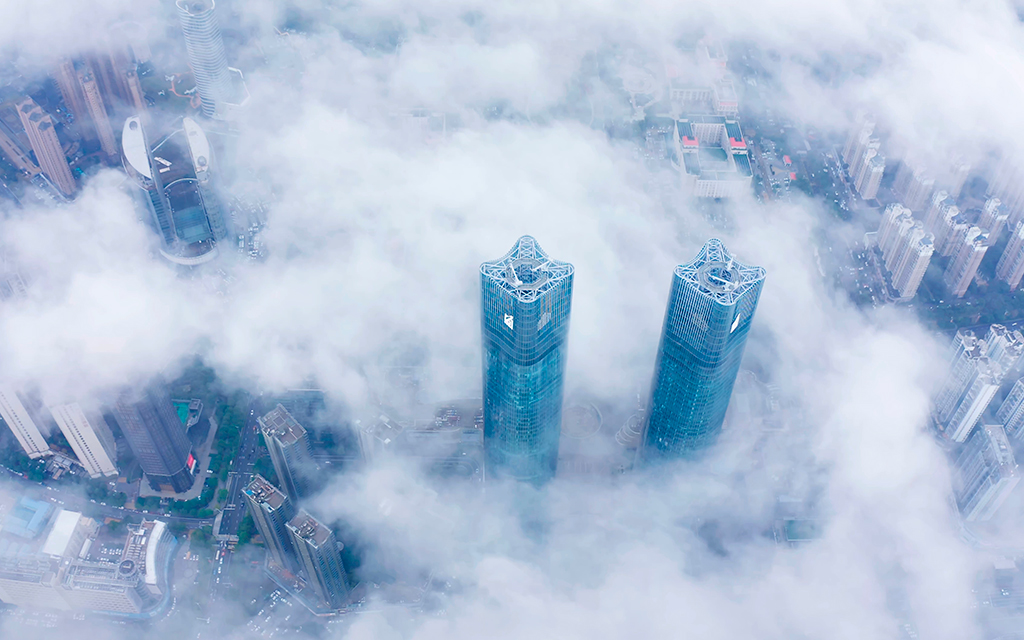
Air pollution is invisible. And yet, understanding it well enough to protect public health requires far more than a network of sensors, it requires data, models, institutions, and communities working together. That is exactly what ClimAIr is building.
The World Meteorological Organization frames the challenge with disarming simplicity: “weather has no passport; climate knows no borders.” As the WMO reminds us on the occasion of World Meteorological Day 2026, Earth observations are the indispensable basis of weather and climate intelligence, and yet significant gaps in the global observing system persist. Those gaps have consequences that reach deep into urban life, into hospitals, into lungs.
Air pollution is invisible. Understanding it, really understanding it, at the level needed to protect public health, requires something far more sophisticated than a network of measuring stations. It requires data, models, ethics, and policy working together. That is exactly what ClimAIr is building.
ClimAIr aims to investigate the complex relationships between climate change, air pollution, and non-communicable respiratory diseases using advanced Artificial Intelligence (AI) tools. By integrating interdisciplinary research and innovative AI methodologies, ClimAIr seeks to provide robust scientific evidence to inform policies and actions that mitigate pollution-related health risks. Advanced modelling techniques, such as the System for Integrated modelling of Atmospheric composition (SILAM), are used to provide high-resolution environmental data and predict future pollution levels.
You cannot measure everywhere
The starting point for any serious air quality research is a simple but uncomfortable truth: we will never have enough sensors.
That’s why models are essential, “we can’t measure air quality everywhere,” says Ari Karppinen, research manager at the Finnish Meteorological Institute. “So, the models are needed to fill these gaps, showing conditions where no measurement data exists.”
Crucially, models are also the only tools that allow us to understand and predict air quality and climate impacts even far ahead in the future: For ClimAIr, working across nine target cities in Europe, this is the starting point, and it is what drives the data collection work at the heart of the project.
This is where remote sensing comes in. Werner Wiedemann, from Remote Sensing Solutions (RSS) in Munich, explains that his team collects multiple layers of data, satellite imagery, ground-based measurements from environmental stations, traffic density, vegetation, and building heights, and harmonizes them into a single dataset that can be shared across all project partners. “We harmonize all these datasets to create one dataset which can be used for modelling from all partners,” he says.
But building that harmonized dataset is far from simple. Each of ClimAIr’s nine target cities comes with its own data infrastructure, standards, and gaps. “Some cities, like Toulouse, have very high-resolution datasets which are public and we can just download them,” Wiedemann explains. “For other cities we have more problems because the resolution is not so good. And in the end, we need to try to create one harmonized dataset for each city, and collecting all these datasets from different sources is quite tricky and time intensive.”
From data to models: Understanding how pollution moves
Once the data is collected and harmonized, the next phase of scientific analysis begins. Meteorological modelling is essential for understanding how pollutants behave once released into the atmosphere. “Without meteorological modelling we are not able to understand how pollution actually transfers in our atmosphere,” says Karppinen. “We just can only estimate the emissions, but we don’t know what happens after the emission.”
High-resolution weather modelling allows researchers to assess how pollution transfers from emission sources through the air and to the people breathing it. Within ClimAIr, this work is particularly focused on urban environments, where accurately modelling meteorological conditions is a very difficult task. “We especially concentrate on getting the meteorological conditions in urban areas correctly, because that’s one of the main challenges in air quality modelling in urban areas”, Karppinen notes.
The results are promising. “We have already made very good steps in understanding and modeling the conditions in tricky urban areas,” he says, adding that by the end of the project, the team expects to be able to predict pollution loads to people “much more reliably and in much finer resolution than before the project.”
One concrete example of how data and modelling come together comes from Wiedemann, who explains how the model is built from multiple sources: "For air pollution modelling, we basically use data not only from the measuring stations in the city, but we are also using data from the surroundings like agricultural fields around the city, different tree types in the city. And with all this, we can then feed a model, and the output will give us information about air pollution in the whole city."
He also describes how lidar data, collected from cities across Europe, is used to measure vegetation density. "With the vegetation density in combination with the wind speed, we can see how the wind behaves behind a tree, and taking pollen into account, we can better model how pollen is spread out over a city." For a project focused on allergic respiratory diseases, this level of detail is not a minor technical point. It is the whole point.
Models for the future, not just the present
Perhaps the most consequential aspect of ClimAIr’s modelling work is its temporal dimension. These tools are not just designed to describe air quality today, they are built to project what will happen in ten, twenty, or fifty years. “The air quality and climate change need to be understood far ahead in the future, and the models are able to help with that,” says Karppinen.
This long-term perspective connects directly to what the WMO describes as the core rationale for investing in observations and modelling: every infrastructure investment, every health management plan, and every policy decision depend on the intelligence that observations and models make possible. “It’s not what happens next month or next year, but what happens in ten years or twenty years or fifty years which is important,” Karppinen explains. “Before making political decisions about emissions, the models will help us understand what those decisions will practically mean twenty or fifty years ahead. Here the models can really make the difference.”
When science meets policy: The readiness gap
Generating accurate models is one thing. Ensuring that institutions are equipped to act on them is another challenge entirely, and one that George Manea, founder and director of the Euro-Atlantic Diplomacy Society (EADS), knows well.
“The institutional readiness and change management when it comes to the policy field is very important,” he says. For Manea, making the ecosystem of public health institutions, policymaking bodies, and governance structures requires addressing three distinct readiness layers.
The first is the capacity to absorb information. ClimAIr produces vast amounts of data and AI-powered outputs, and institutions need data governance frameworks to assimilate them. The second is capacity building, ensuring that the people inside these institutions can actually integrate, manage, use, and interpret what the project delivers. The third, and perhaps most underestimated, is resistance to change. “It’s always linked to innovation and change management,” Manea explains. “We have to work with these aspects in order to lower the degree of resistance.”
When all three layers are addressed, he argues, the result is an ecosystem capable of working both vertically, from local to national to EU level, and horizontally across sectors including health, environment, and urban planning.
Building public trust across cultures
Even the most robust policy framework will fail if the public does not trust the proposed solutions. For a project operating across nine European countries with different languages, cultures, and political contexts, this is a genuine challenge. Manea is clear that there is no shortcut. “There is no magic recipe,” he says. “Maybe we can have some magic ingredients.”
Those ingredients, in his view, include transparent communication about risks and benefits, early stakeholder engagement, and participatory co-design with communities and end users. Crucially, he also emphasizes the importance of linking air quality data with health impacts in ways that people can relate to on a daily basis, “this will also contribute to building trust and relevance,” he says.
The project’s pilots across different European cities play a key role here too, providing real-world validation of the solutions being developed and demonstrating their effectiveness beyond the laboratory. And when it comes to communication, one size will not fit all. “Considering we are coming from different countries and different cultures, it is very important to tailor the messages to be adapted to local context, because in this way it will contribute to the social legitimacy of the strategies, but at the same time it will also contribute to long-term adaptation.”
A shared infrastructure for a shared challenge
The WMO puts it simply: “Only by observing today, can we protect tomorrow.” And the health stakes are clear: air pollution causes an estimated 7 million deaths every year, mainly from non-communicable diseases such as chronic respiratory diseases, cardiovascular diseases, and cancer. ClimAIr takes that urgency and builds the full chain, the models that make sense of incomplete data, the institutions that need to be ready to act, and the communities that need to trust what is being proposed. By the end of the project, the goal is to launch the ClimAIr tool, a web app designed to help doctors, urban planners, policymakers, and citizen scientists with reliable information on disease prediction, training on pollution and health impacts, and guidelines for decision-makers.