 info@climair-project.eu



Image
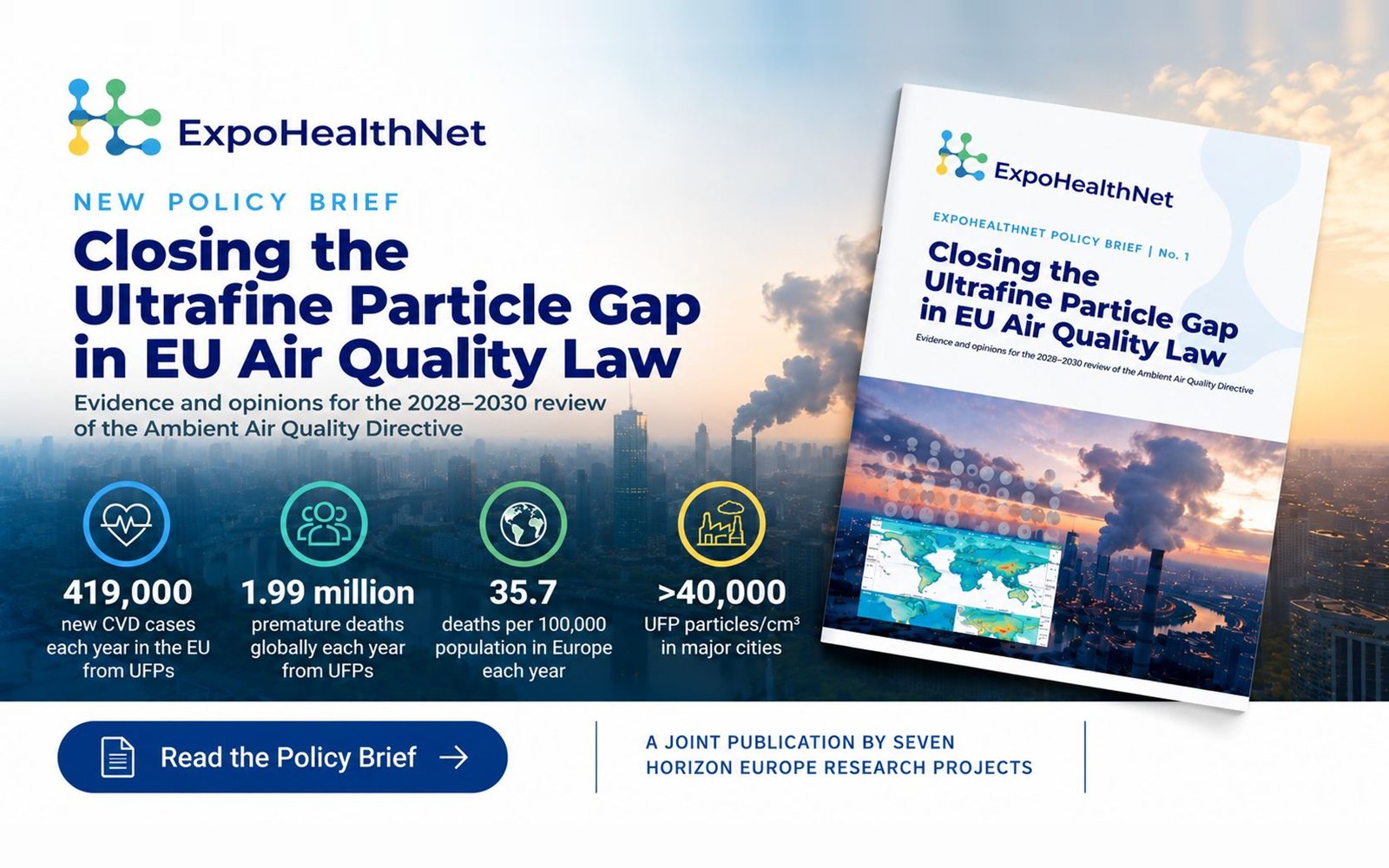
New ExpoHealthNet joint policy brief calls for EU action on ultrafine particles
The brief, prepared by the ExpoHealthNet research cluster, calls for stronger EU air quality rules to address ultrafine particles and combined environmental exposures.
Image

Promoting ethical standards for ClimAIr’s health and AI research
Before any clinical work begins, every ClimAIr study must have the right ethical and administrative approvals. A new report explains how the project meets these standards across all participating countries.
Image

ClimAIr research contributes to two major Lancet Countdown reports on health and climate change
Research carried out within ClimAIr by the Finnish Meteorological Institute has contributed to two major Lancet Countdown reports this year: the 2025 global report and the 2026 Europe report. Both assessments track how climate change is affecting human health.
Image

Allergic rhinitis: The chronic disease society underestimates
Allergic rhinitis affects one in three people in Western countries, yet it's rarely taken as seriously as it deserves. Dr. Ibon Eguiluz, allergologist and ClimAIr researcher, explains why this disease tops the social cost rankings, how air pollution and climate change are worsening it, and how ClimAIr is developing tools to predict and manage its impact.
Image

The data behind the air we breathe: How ClimAIr is building the infrastructure for healthier cities
Air pollution is invisible. And yet, understanding it well enough to protect public health requires far more than a network of sensors, it requires data, models, institutions, and communities working together. That is exactly what ClimAIr is building.
Image

ClimAIr Tool: Supporting Decisions at the Intersection of Air Quality, Climate, and Health
The ClimAIr project is developing a user-friendly, web-based platform to better understand and address the health impacts of air pollution and climate change. A new ClimAIr report outlines the initial requirements and design approach for this tool, establishing the basis for an Integrated Decision Support System (IDSS) that will enable evidence-based insights on respiratory disease risks and support knowledgeable decision-making across sectors.
Image

Building Trust by Design: The Secure AI Infrastructure Behind ClimAIr
In ClimAIr, data protection is not something added at the end, it is the starting point. The entire system is designed to enable advanced AI training while ensuring that sensitive medical information remains under the full control of healthcare providers.
Image

ClimAIr M12 General Assembly: Science, Collaboration and Responsible Innovation
One year into the project, the ClimAIr consortium met in Istanbul to review progress and coordinate the next phase of research on air pollution, climate change and health.
Image

New Report on the Effects of Air Pollution on Airway Allergy
This report developed within the ClimAIr project brings together current evidence on the short-term effects of outdoor air pollution on allergic rhinitis. By reviewing published epidemiological studies conducted in different geographical settings and population groups, it describes how variations in ambient air quality are associated with symptom control and healthcare use. The report supports ongoing scientific efforts to better understand the links between air pollution, climate-related factors, and airway allergic diseases.